



Classic Turn-Based vs Tactical Turn-Based Combat
On abstraction, space, pacing, and what each form is actually trying to make the player think about
There is a habit I keep seeing in game discussions, and to be fair, I have done it too.
We say turn-based combat as if that phrase is already specific enough.
It usually is not.

Once you put Dragon Quest, Darkest Dungeon, Fire Emblem, Tactics Ogre, Final Fantasy Tactics, Into the Breach, and Triangle Strategy under the same umbrella, the category becomes so broad that it stops being useful. The turns are shared. The design goals are not.
That was the point where my own thinking started to shift.
I stopped asking whether a game was “turn-based,” and started asking a much more useful question:
What is the game actually asking the player to reason about?
That question turns out to split the space very cleanly.
Classic turn-based combat is usually asking the player to reason about actions, resources, and sequencing.
Tactical turn-based combat is usually asking the player to reason about position, exposure, terrain, and future board state.
Those sound close. In practice, they produce very different games.
This article is an attempt to break that difference down properly - not as a vague genre conversation, but as a game design one.
A useful historical split
One reason these conversations get muddy is that both traditions share ancestry.
Early digital RPG combat inherited a lot from tabletop forms: turns, stats, probabilities, party composition, attack resolution. But once those ideas met computer interfaces, two distinct lines started to harden.
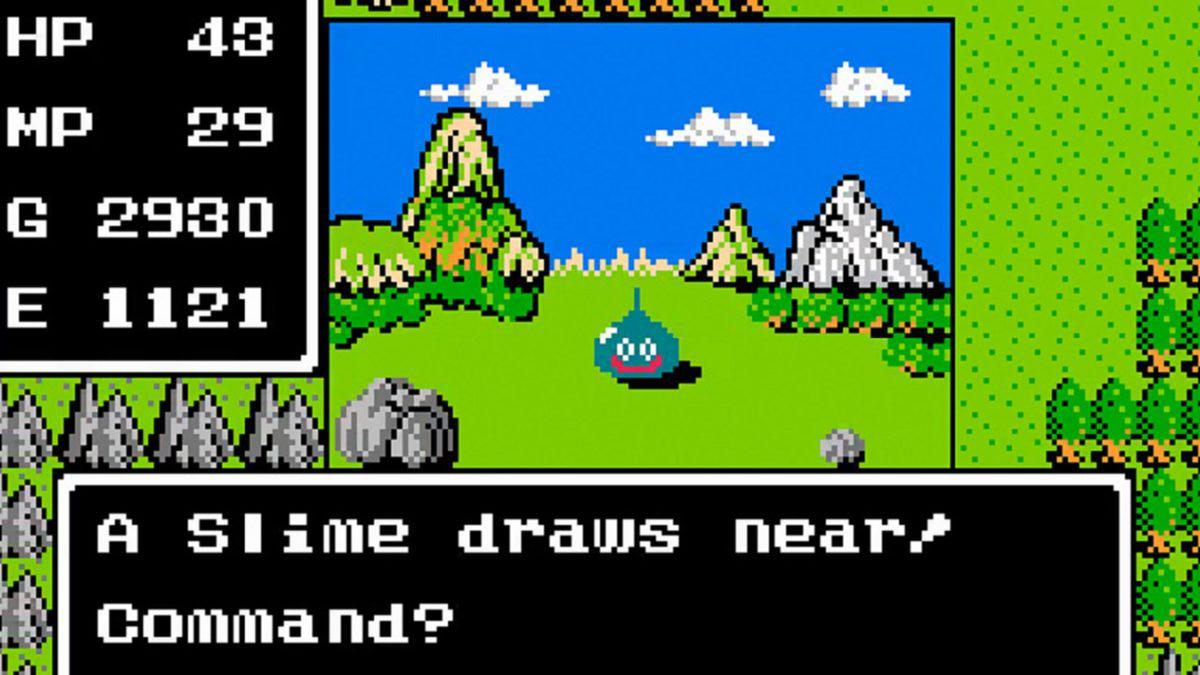
One line moved toward abstraction and menu-driven clarity.
That is the line most people associate with classic JRPG combat. Dragon Quest is the obvious anchor point here: Square Enix still frames the original game as the first episode of the series, first released in 1986, and it remains one of the clearest expressions of classic command-based combat.[1] That lineage is not just about chronology; it is about design philosophy. The battlefield is simplified so the decision can be focused.
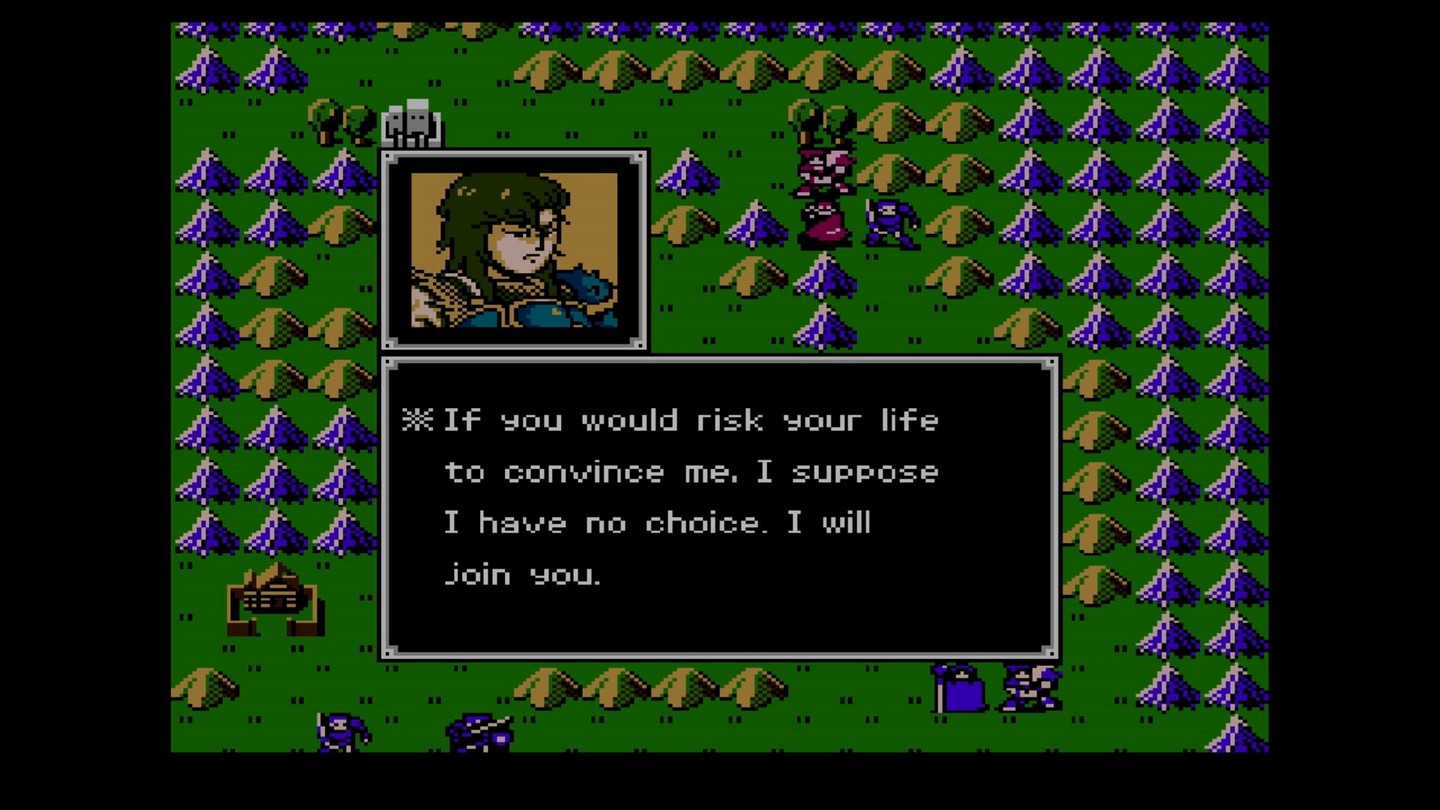
The other line moved toward board-state reasoning.
Nintendo still describes the original Fire Emblem: Shadow Dragon and the Blade of Light as the first game in the series, released in 1990, and importantly, it sits in a lineage where terrain, unit placement, and loss conditions are not side considerations - they are the game.[2] By the mid-1990s, Tactics Ogre had pushed that form further, and later games like Final Fantasy Tactics and Triangle Strategy would refine the same core idea in different directions.[3][4]
That split matters because these two forms solve different design problems.
Classic turn-based combat is trying to answer:
How do we make choosing an action interesting?
Tactical turn-based combat is trying to answer:
How do we make the battlefield itself interesting?
That is the real fork in the road.
The defining difference: abstraction of space
If I had to reduce the whole article to one design axis, it would be this:
Classic turn-based combat abstracts space. Tactical turn-based combat operationalizes it.
That sounds more academic than it is, so it is worth unpacking.
In a classic system, the battle usually does not care about literal world position. It may still care about relative position, but that position is abstracted into a simpler representation.
Rows. Ranks. Frontline and backline. Target slots.
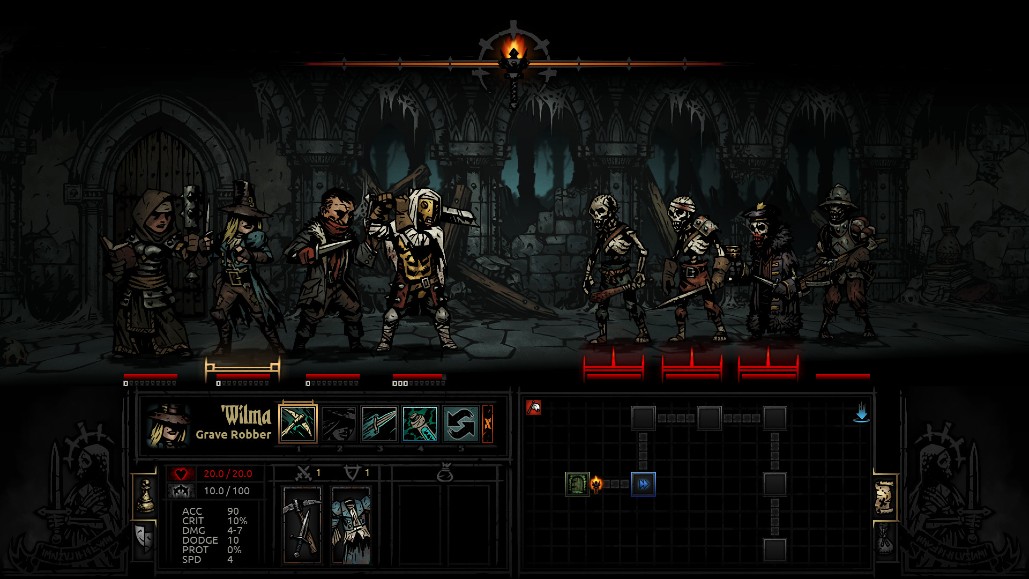
This is where a game like Darkest Dungeon becomes such a good example. It is still very much a classic turn-based combat system in its structure - abilities, status pressure, sequencing, party loadouts, attrition - but it introduces positional abstraction through ranks. Your party and the enemy line both exist in a compact formation model. Position matters, but it matters in a symbolic way: who can hit rank 3, who gets ruined by shuffle, who needs the front to function, who can lunge backward, who can force a pull. That is not spatial tactics in the battlefield sense. It is still classical combat design, but with an extra positional layer folded into abstraction.
This is an important nuance, because it shows that the distinction is not “position exists” versus “position does not exist.”
The distinction is:
- in classic systems, position is usually compressed into a smaller symbolic model
- in tactical systems, position is usually expanded into navigable space
That expansion changes the player’s thought process completely.
What classic turn-based combat is really optimizing for
Classic turn-based combat is often at its best when it is optimizing for clarity, tempo, and systemic readability.
That sounds modest, but it is actually a very strong design advantage.
When the battlefield is abstracted, the player can direct most of their attention toward:
- what an ability does
- which target is best
- whether now is the right moment to commit a resource
- how to sequence abilities for maximum value
- how much risk to absorb this turn versus later
This creates a decision space that is usually tighter, faster to parse, and more legible through UI.
That is why classic systems are so good at supporting:
- status-effect ecosystems
- elemental matchups
- party role interaction
- combo sequencing
- boss scripting
- long-form attrition over many fights
A classic system can afford to become numerically rich because its spatial model is comparatively light.
That trade is easy to underestimate.
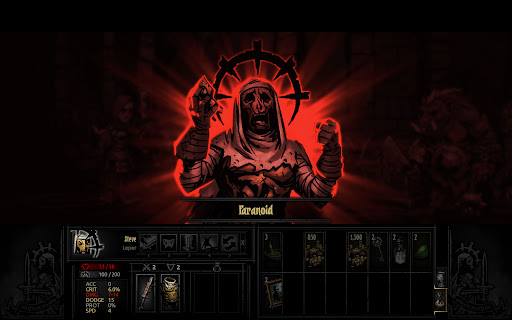
The more a system removes spatial interpretation, the more room it creates for:
- ability identity
- resource tension
- probabilistic texture
- encounter scripting
This is part of why classic combat often supports larger volumes of fights more comfortably. Encounters can resolve faster because the player’s cognitive load is concentrated in action selection rather than full board evaluation.
And that speed is not just convenience. It is a pacing tool.
Classic turn-based combat tends to work very well in games where battle is part of a larger rhythm of:
- exploration
- progression
- economy
- equipment tuning
- dungeon endurance
In other words, classic combat often sits comfortably inside a broader RPG loop because it does not demand that every single encounter behave like a bespoke tactical puzzle.
What tactical turn-based combat is really optimizing for
Tactical turn-based combat shifts the design burden.
Once units occupy literal navigable space, the interesting question is no longer only what can this unit do? It becomes:
- where can this unit do it from?
- what does moving there expose?
- what space does this unit control by standing there?
- how does this decision change the next two turns, not just this one?
Now the system is not just evaluating actions.
It is evaluating state transitions.
That is why tactical systems so often feel deeper even when they contain fewer raw abilities than classic systems. Space multiplies consequences.
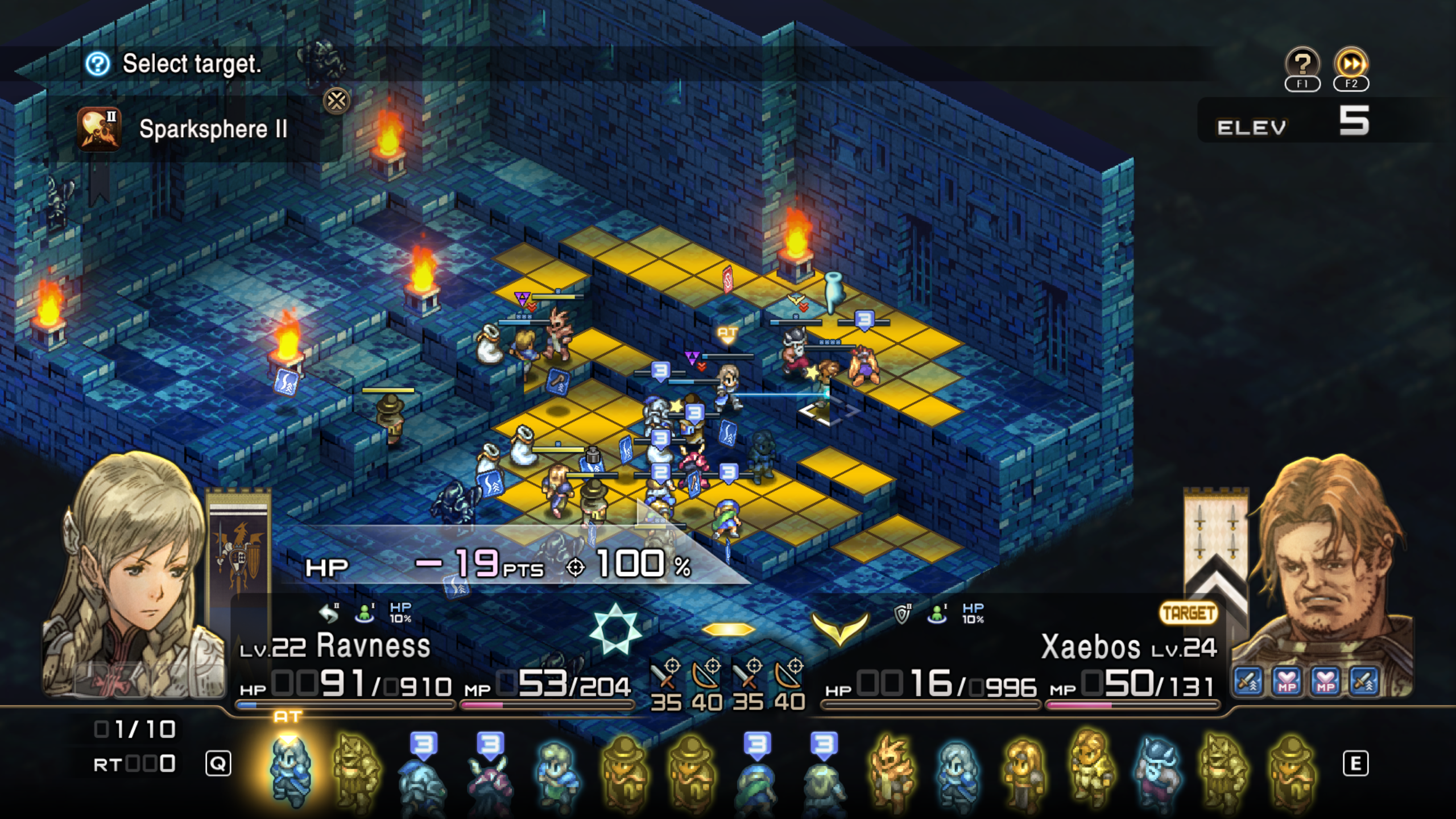
A simple attack command in a tactical game is rarely just an attack command. It is bundled with:
- pathing
- line of approach
- threat exposure
- flank possibility
- terrain implication
- turn-order consequence
That bundling creates emergence.
Nintendo’s own Triangle Strategy tips are unusually blunt about this: “Positioning is the key to victory,” and the examples they give are exactly the ones you would expect - high ground for safety and damage, back attacks for criticals, and automatic follow-up attacks when units surround an enemy.[4] The Steam page is even more concise: terrain, elevation, flanking, and coordinated follow-ups are presented as the heart of battle depth.[5]
That is not just flavor text. It reflects a different design economy.
In a tactical system, space itself becomes a resource.
- Choke points are resources.
- Height is a resource.
- Tempo on a bridge is a resource.
- Occupying a safe attack angle is a resource.
- Denying a tile can matter as much as dealing damage.
This is why good tactical combat often feels less like “using moves” and more like “negotiating a board.”
The real design trade: explicit complexity vs emergent complexity
This is the part I find most useful when comparing the two forms.
Classic turn-based combat tends toward explicit complexity.
The game says:
- here are the actions
- here are the costs
- here are the numbers
- here are the outcomes you should expect
If the system is deep, it is usually deep because of how those explicit pieces interact.
Tactical combat tends toward emergent complexity.
The game says:
- here is the space
- here are the rules of movement and attack
- now deal with the consequences of putting those rules on a map
The depth comes less from the size of the action list and more from the interaction between:
- geometry
- unit capabilities
- timing
- objective structure
Neither form is inherently superior. But they place design effort in different places.
Classic combat asks the designer to make actions and numerical systems compelling.
Tactical combat asks the designer to make maps, movement rules, and positional incentives compelling.
That difference matters a lot in production.
Why tactical systems are harder to communicate
I do not think tactical systems are always harder to design than classic systems.
I do think they are usually harder to teach cleanly.
Classic systems communicate very naturally through menus and numbers. Their causes and effects are often easier to express in interface.
Tactical systems rely heavily on spatial literacy.
The player has to understand things like:
- movement range
- enemy reach
- danger zones
- line of sight
- cover or elevation advantage
- whether a tile is safe now but terrible one turn later
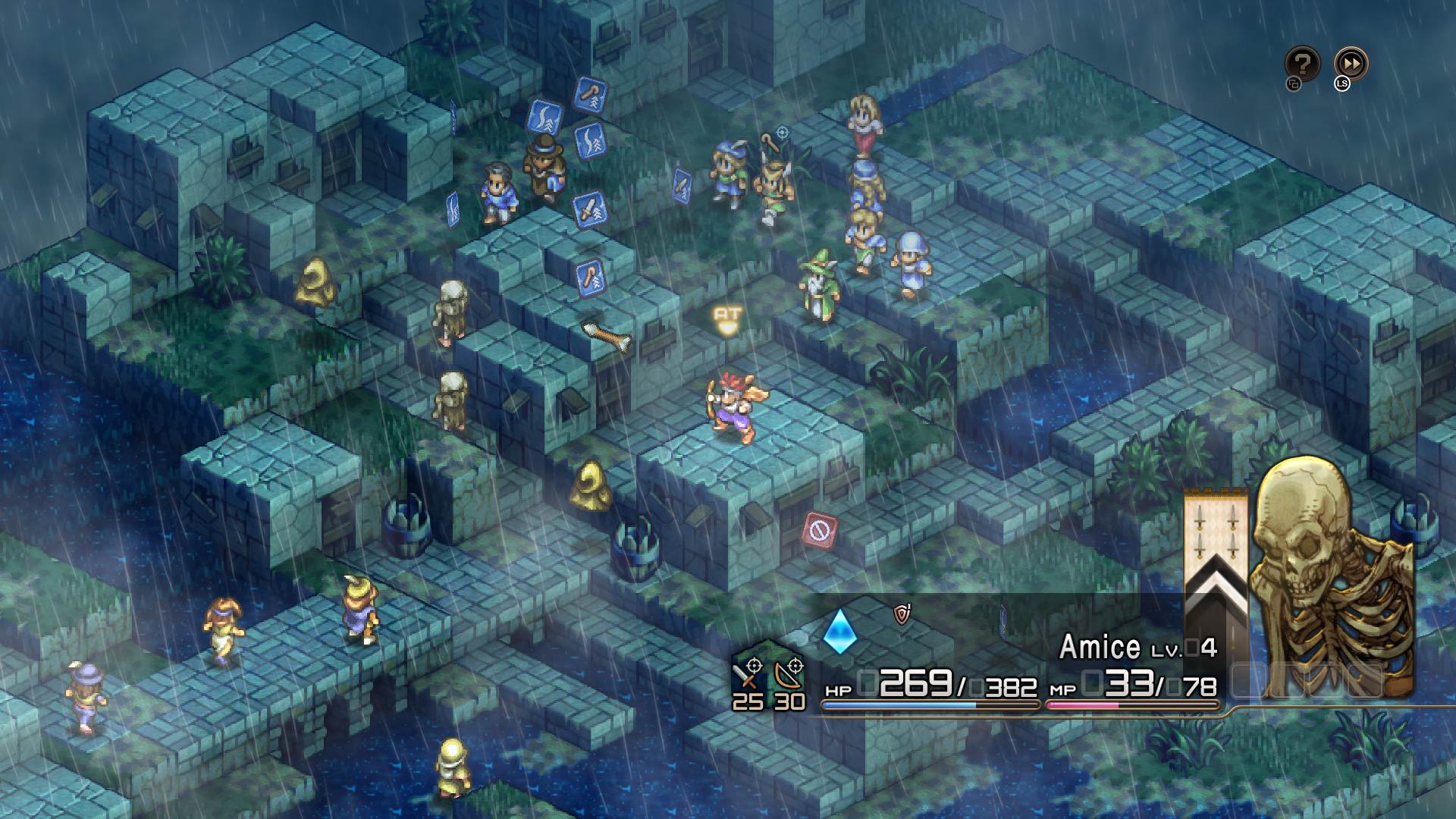
That means the interface burden is much higher.
A tactical game with poor readability can feel unfair even when it is mathematically consistent.
That is one reason Nintendo spent part of the Fire Emblem series’ evolution broadening accessibility with modes like Newcomer/Casual and later Phoenix Mode: when positional consequence and permadeath coexist, the cost of misunderstanding can be severe enough to eject players from the form entirely.[2]
This is where tactical combat earns both its highs and its frustrations.
When it is readable, it feels brilliant.
When it is not, it feels like the game punished the player for not seeing an invisible sentence in the rules.
That is not a small problem. It is one of the central design problems of the form.
Failure states are structured differently
Classic turn-based combat usually makes failure feel like one of three things:
- poor resource management
- bad sequencing
- inability to answer a specific threat
Tactical combat often makes failure feel like positional overcommitment.
That changes the emotional texture of play.
A classic system says:
you spent too much, healed too late, brought the wrong composition, or took the wrong line.
A tactical system says:
you stood in the wrong place, too early, for the wrong reason.
Those are very different forms of regret.
The second one tends to feel more personal because movement is commitment.
I kept circling back to that idea while thinking about these systems.
Position is commitment.
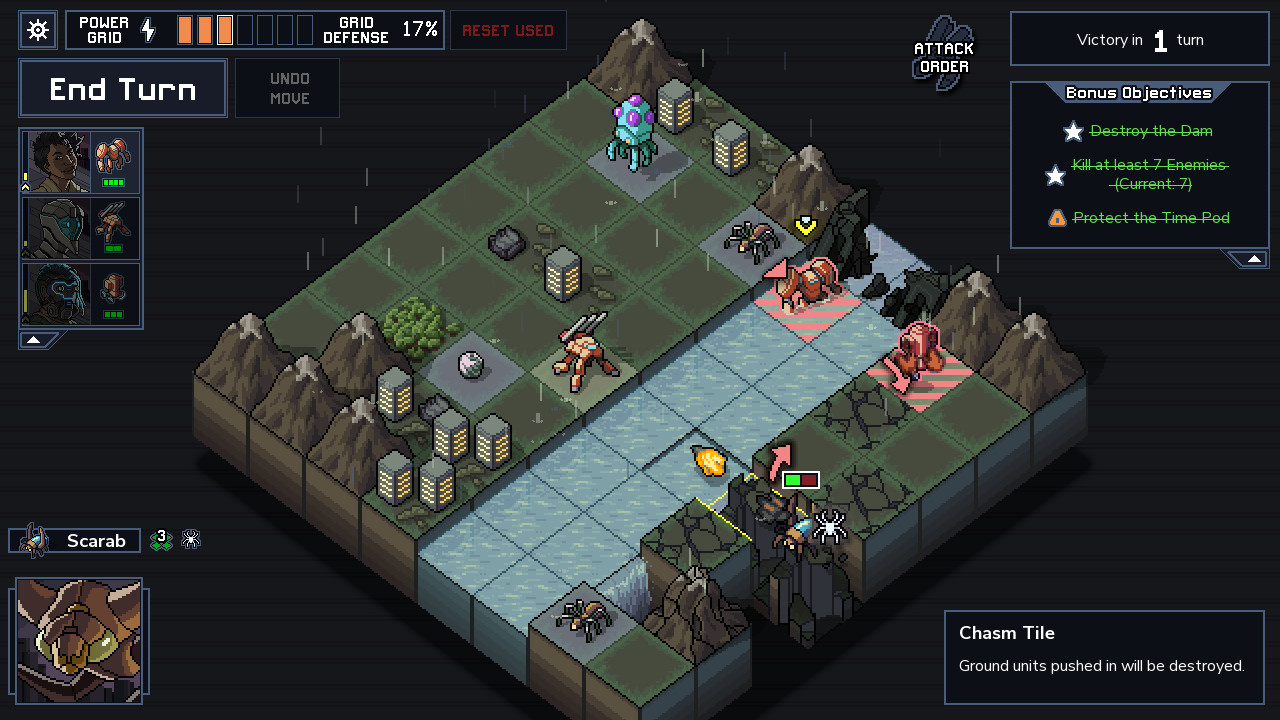
Once a tactical game is good, movement stops being a setup action and becomes the action. The attack is often just the visible payoff.
That is also why so many tactical games become memorable through stories of sacrifice, overextension, and rescue. The battlefield creates narrative through placement.
Game Developer’s feature on Into the Breach gets at this from another angle. Justin Ma describes how the game asks players to unlearn the idea that losing a mech is automatically the worst outcome, because the real failure state sits in civilian infrastructure and the power grid instead.[6] That is fascinating design, but the deeper point is broader:
tactical games can relocate value away from the unit and into the board state itself.
That is much harder to do in a classic abstract battle model.
The content burden is different too
A classic turn-based system can get a lot of mileage out of:
- enemy composition
- stat tuning
- skill interactions
- phase scripting
- dungeon pressure
A tactical system must also make the arena worth thinking about.
That sounds obvious, but it has huge consequences.
If the map is uninteresting, tactical combat collapses quickly.
Good tactical encounters rely on meaningful spatial asymmetry:
- narrow vs open lanes
- elevation breaks
- protected backlines
- escort or defend geometry
- delayed reinforcements that matter because of where they appear
- objective placement that competes with combat efficiency
This means tactical combat is often more expensive in encounter design than it first appears.
A flat rectangle with no positional drama can reduce even a mechanically sound system into repetitive trades.
Classic systems have their own content burden, of course, but it is usually concentrated in action design and encounter scripting rather than arena architecture.
That distinction becomes very important when deciding scope.
Classic systems are not “less tactical” - they are tactical in a different layer
This is where I think discussions often become unhelpful.
People sometimes talk about classic systems as if they are shallower by default.
I do not think that is true.
I think they are tactical in a different layer.
Classic combat can be deeply tactical in terms of:
- action timing
- damage race management
- healing thresholds
- rank manipulation
- buff/debuff windows
- cooldown pressure
- comp-building
What it usually does not do is externalize those decisions into a literal board.
That difference matters because the player experiences the problem differently.
In a classic game, the tactical problem is often:
given the current battle state, what sequence yields the best swing?
In a tactical game, the tactical problem is often:
how do I shape the next battle state before I commit the action?
One is action-first. The other is state-first.
That is a much cleaner distinction than “simple” versus “deep.”
A note on pacing: why classic combat often survives repetition better
One thing I have become increasingly convinced of is that classic systems usually tolerate higher encounter frequency.
That is not because they are worse.
It is because they are cheaper to parse.
If each battle asks the player to fully evaluate geometry, future threat, and tile commitment, then battle density has to be handled carefully. Tactical combat burns more cognitive energy per encounter.
That is why many strong tactical games either:
- keep encounter count lower,
- make each map more bespoke,
- or turn the battle into a puzzle-like object rather than a routine one.
Into the Breach is a great example of this puzzle pressure. Game Developer described it as a tactics game where you “out-maneuver and out-think” the enemy, and that framing is accurate because each turn is less about exchange efficiency and more about restoring board order.[6]
Classic systems, meanwhile, can support dungeon crawls, long stretches of battle, and grinding structures more naturally because the loop is usually faster to read and faster to execute.
This matters when choosing a combat form for a project.
If a game wants many battles as part of a larger progression rhythm, classic combat often fits that cadence better.
If a game wants each battle to feel authored, situational, and spatially distinctive, tactical combat often earns the extra load.
Tactical depth is not the same thing as strategic depth
This is a subtle but important distinction.
A lot of tactical games are excellent at short-arc decision-making. They ask urgent local questions:
- can I stop this threat this turn?
- can I hold this tile?
- can I survive the next wave?
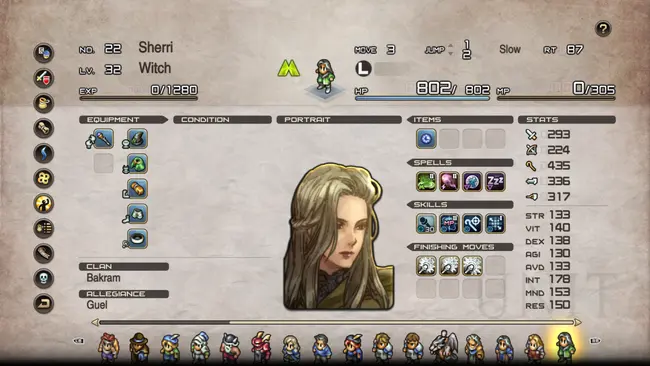
Keith Burgun’s framing of short arcs and long arcs is useful here: tactical games often excel at immediate local operations, but they can still need larger structures to create strategic texture over time.[7]
That larger structure can come from:
- campaign maps
- permadeath
- roster management
- resource economies
- long-term upgrade direction
- branching objectives
This is another area where classic and tactical forms differ in emphasis.
Classic turn-based RPGs often embed strategy through long-term attrition, economy, and build paths almost by default.
Tactical games sometimes need to work harder to ensure that the battlefield game does not become isolated from the larger campaign game.
When they do solve it well, the result is powerful. But it is worth recognizing that “deep tactical combat” does not automatically mean “strong strategic game.”
Why hybrid systems are so tempting
Once you look at the strengths side by side, the temptation to hybridize becomes obvious.
Classic systems offer:
- speed
- clarity
- strong ability ecosystems
- low interface ambiguity
Tactical systems offer:
- spatial drama
- emergent problem-solving
- positional identity
- richer board-state consequence
So naturally, designers keep trying to borrow from both.
And sometimes that works beautifully.
A game like Triangle Strategy uses highly differentiated characters, explicit ability roles, and a visible turn structure, but still anchors the whole thing in terrain, flanking, and placement.[4][5]
Meanwhile, games in the Darkest Dungeon family show how much tactical identity can be smuggled into a classic framework through positional abstraction and role pressure, without ever fully becoming a board-based tactics game.
But hybridization has a cost.
If a system combines:
- heavy spatial reasoning n- dense ability interactions
- layered status systems
- complex objective structures
then the player can end up doing too much bookkeeping to enjoy any of it.
This is where restraint matters.
A combat system does not need to maximize every dimension.
It needs to know which dimension is carrying the experience.
What each form is best at evoking
This may be the most practical way to think about the difference.
Classic turn-based combat is especially good at evoking:
- tension through attrition
- role interplay through abilities
- momentum swings through sequencing
- high encounter readability
- campaign endurance and resource anxiety
Tactical turn-based combat is especially good at evoking:
- battlefield control
- sacrifice and rescue
- flanking, trapping, and denial
- situational cleverness
- the emotional weight of commitment
That last point matters more than I expected.
Tactical systems often feel more dramatic not because they are more cinematic, but because a position on the board can carry moral and strategic weight at the same time.
A unit holding a bridge, baiting a pincer, or choosing whether to save an ally at the cost of formation is not just executing a move. It is inhabiting a situation.
That is a very particular kind of drama.
Classic systems can absolutely produce drama too, but they usually do it through:
- attrition curves
- survival against bad odds
- clutch sequencing
- build payoff
One is drama through board state.
The other is drama through system pressure.
So which one is “better”?
I do not think that is the useful question.
The better question is:
What kind of thought do I want the player to enjoy?
If the answer is:
- reading a system,
- managing pressure,
- sequencing actions,
- building efficient parties,
- navigating long-form attrition,
then classic turn-based combat is often the stronger fit.
If the answer is:
- reading a battlefield,
- controlling space,
- taking positional risks,
- committing to formation,
- solving encounters through movement as much as through action,
then tactical turn-based combat is usually the right direction.
That sounds obvious once stated, but I think it is where a lot of combat design conversations should begin.
Not with genre labels.
With the thought pattern you want to reward.
A final personal note
The more I looked at these systems, the less interested I became in arguing about which one is more sophisticated.
That argument usually goes nowhere.
What stayed interesting to me was something much simpler:
classic systems make me think about what to do.
tactical systems make me think about where to become dangerous.
That is not just a mechanical distinction. It changes the entire emotional texture of combat.
And once I started looking at it that way, a lot of games made more sense.
Closing thought
Classic turn-based combat and tactical turn-based combat both live under the same broad family, but they are not minor variants of each other.
They are different ways of structuring player thought.
One compresses the battlefield so actions become clearer.
The other expands the battlefield so consequence becomes spatial.
Neither is the final form of turn-based design.
They are just two very different answers to the same enduring question:
How do we make a player stop, think, and care before they commit?
References
[1] Square Enix, “Three classic DRAGON QUEST games out now on Nintendo Switch!” The article states that the series has existed since the release of DRAGON QUEST in 1986.
https://www.square-enix-games.com/news/classic-dragon-quest-switch
[2] Nintendo, Iwata Asks: Fire Emblem Fates, section “It’s for beginners and for Fire Emblemers.” Nintendo notes that Fire Emblem: Shadow Dragon and the Blade of Light released in 1990 and discusses later accessibility modes such as Newcomer/Casual and Phoenix Mode.
https://www.nintendo.com/en-gb/Iwata-Asks/Iwata-Asks-Fire-Emblem-Fates/Fire-Emblem-Fates/6-It-s-for-beginners-and-for-Fire-Emblemers/6-It-s-for-beginners-and-for-Fire-Emblemers-1032076.html
[3] Square Enix, Tactics Ogre: Reborn product page. Used here as an official series reference point for the Tactics Ogre lineage and its modern positioning.
https://www.square-enix-games.com/en_US/games/tactics-ogre-reborn
[4] Nintendo, “Ten tactical tips for TRIANGLE STRATEGY!” Notes that positioning is key, and specifically calls out high ground, back attacks, and follow-up attacks.
https://www.nintendo.com/en-gb/News/2022/March/Ten-tactical-tips-for-TRIANGLE-STRATEGY–2181496.html
[5] Steam store page for TRIANGLE STRATEGY. Describes terrain, elevation, flanking, and coordinated follow-up attacks as core parts of the battle system.
https://store.steampowered.com/app/1850510/TRIANGLE_STRATEGY/
[6] Brendan Sinclair, “Reimagining failure in strategy game design in Into the Breach,” Game Developer, 2018. Useful for its discussion of alternative tactical failure states and how objectives shift player priorities away from simple unit survival.
https://www.gamedeveloper.com/design/reimagining-failure-in-strategy-game-design-in-i-into-the-breach-i-
[7] Keith Burgun, “Adding Strategy to your Tactics,” Game Developer, 2021. Useful for the distinction between short tactical arcs and longer strategic arcs in turn-based design.
https://www.gamedeveloper.com/design/adding-strategy-to-your-tactics

